
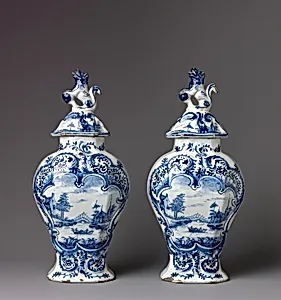
Covered vase
Medium
Tin-glazed earthenware
Dimensions
Height (With cover): 8 3/4 in. (22.2 cm)
Classification
Ceramics
Culture
Dutch, Delft
Department
Robert Lehman Collection
Museum
Metropolitan Museum of Art, New York, NY
Credit
Robert Lehman Collection, 1975
Accession Number
1975.1.1615a,b
Rights
Public Domain
Tags
Art Historical Context
This elegant covered vase, produced by the De Porceleyne Bijl (The Porcelain Axe) in Delft between 1764 and 1788, exemplifies the Dutch mastery of tin-glazed earthen, known as Delftware. Standing8 3/4 inches tall with its lid, this piece from the Robert Lehman Collection at the Metropolitan Museum of Art the late 18th-century heyday of Delft pottery, when local artisans crafted affordable alternatives to expensive Chinese porcelain for European homes. The tin-glaze technique was key to Delftware's allure: a tin-opacified lead glaze coated the earthenware body, creating a brilliant white surface ideal for hand-painted decorations. Here, landscape motifs—likely serene Dutch scenes or pastoral vistas—bring vivid color and narrative depth, applied in overglaze enamels before a final low-temperature firing. This method allowed factories like De Porceleyne Bijl, identifiable by its axe symbol, to produce functional yet artistic wares for tabletops and cabinets. Culturally, Delftware symbolized Dutch ingenuity and global trade ambitions, bridging everyday utility with luxury aesthetics. As export demand waned by the late 1700s, pieces like this vase preserve a golden era of innovation, inviting us to appreciate their timeless charm.