
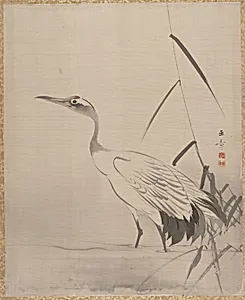
Crane Among Reeds
1887–92
Medium
Album leaf; silk
Dimensions
13 1/2 x 10 7/8 in. (34.3 x 27.6 cm)
Classification
Paintings
Culture & Period
Japan · Meiji period (1868–1912)
Department
Asian Art
Museum
Metropolitan Museum of Art, New York, NY
Credit
Charles Stewart Smith Collection, Gift of Mrs. Charles Stewart Smith, Charles Stewart Smith Jr., and Howard Caswell Smith, in memory of Charles Stewart Smith, 1914
Accession Number
14.76.61.91
Rights
Public Domain
Tags
Art Historical Context
Created during Japan’s Meiji period (1868–1912), “Crane Among Reeds” captures a moment of quiet natural beauty at a time when the was rapidly modernizing. Artist Kawabata Gyokushō worked in the traditional format of an album leaf, small, intimate work meant for close viewing rather than large-scale display. Painted on silk the delicate surface allows fine brushwork to convey crane’s graceful form and the textures of reeds swaying in the breeze. Cranes have long held deep cultural meaning in Japan, symbolizing longevity, good fortune, and fidelity. By placing the bird among reeds, Gyokushō evokes themes of harmony with nature that remained central to Japanese aesthetics even as Western influences grew. The modest size—just over thirteen inches tall—invites viewers to appreciate the painting’s refined details and serene atmosphere, offering a peaceful counterpoint to the era’s dramatic social changes. Housed in the Metropolitan Museum of Art’s Asian Art collection, this album leaf exemplifies the enduring appeal of bird-and-flower subjects in Japanese painting. Its presence in the Charles Stewart Smith gift highlights how such works traveled from private Japanese albums to public Western museums, preserving their quiet elegance for new generations.