
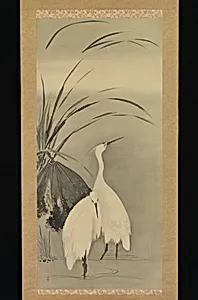
Two Egrets and Lotus
1761–1828
Medium
Hanging scroll; ink on silk
Dimensions
Image: 46 3/4 x 21 1/2 in. (118.7 x 54.6 cm)
Classification
Paintings
Culture & Period
Japan · Edo period (1615–1868)
Department
Asian Art
Museum
Metropolitan Museum of Art, New York, NY
Credit
Gift of Florence and Herbert Irving, 2015
Accession Number
2015.500.9.13
Rights
Public Domain
Tags
Art Historical Context
Behold the graceful "Two Egrets and," a hanging scroll by Sakai Hōitsu (1761–1828), created Japan's Edo period (16151868). This ink-on-silk painting, measuring 46 3/4 x 21 1/2 inches, now graces the Metropolitan Museum of Art Asian Art collection, thanks to the generous gift of Florence and Herbert Irving in 2015. Hanging scrolls like this were prized in Japan for their portability and ritual display, often unrolled during special occasions to immerse viewers in contemplative beauty. Hōitsu masterfully renders two egrets poised among lotus blooms, capturing the elegance of birds—a timeless motif in Japanese art symbolizing purity and harmony with nature. The Edo era, a time of peace and cultural flourishing, saw artists like Hōitsu elevate ink techniques on silk to evoke seasonal serenity and poetic refinement. The delicate brushwork highlights the egrets' poised forms and the lotuses' subtle curves, inviting visitors to ponder the interplay of stillness and life. This work exemplifies the enduring appeal of Edo-period paintings, blending technical precision with nature's quiet poetry for audiences then and now.
About the Artist
Sakai Hōitsu · 1761–1828
Japanese, 1761–1828