
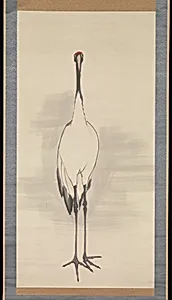
鶴図|Cranes
late 1780s
Medium
Pair of hanging scrolls; ink and color on paper
Dimensions
Image (each scroll): 61 7/16 x 35 7/8 in. (156 x 91.2 cm) Overall with mounting (each scroll): 84 x 36 3/4 in. (213.4 x 93.3 cm) Overall with knobs (each scroll): 84 x 39 1/4 in. (213.4 x 99.7 cm)
Classification
Paintings
Culture & Period
Japan · Edo period (1615–1868)
Department
Asian Art
Museum
Metropolitan Museum of Art, New York, NY
Credit
Fishbein-Bender Collection, Gift of T. Richard Fishbein and Estelle P. Bender, 2011
Accession Number
2011.572.2a, b
Rights
Public Domain
Tags
Art Historical Context
Created in the late 1780s during Japan’s Edo period, this pair of hanging scrolls by Nagasawa Rosetsu captures the graceful presence of cranes through delicate ink and color on paper As traditional Japanese hanging scrolls, they were designed to be viewed sequentially or in seasonal rotation, allowing the birds to seem as though they are moving across the two compositions. The generous scale of each scroll—over five feet tall—invites viewers to appreciate both the fine brushwork and the quiet expanse of the paper surface. Cranes have long held auspicious meanings in Japanese culture, symbolizing longevity and good fortune. Rosetsu’s choice to depict them in a pair underscores themes of harmony and balance central to Edo-period aesthetics. Now part of the Metropolitan Museum’s Asian Art collection, these scrolls offer a window into the refined artistic traditions of 18th-century Japan, where nature and symbolism were elegantly intertwined.