
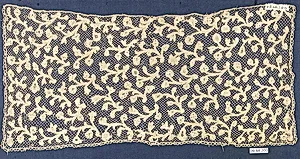
Cravat
Unknown Artist
early 18th century
Medium
Bobbin lace, Milanese lace
Dimensions
L. 14 1/2 x W. 7 inches (36.8 x 17.8 cm)
Classification
Textiles-Laces
Culture
Italian, Milan
Department
European Sculpture and Decorative Arts
Museum
Metropolitan Museum of Art, New York, NY
Credit
Purchase by subscription, 1909
Accession Number
09.68.200
Rights
Public Domain
Art Historical Context
Step into the refined world of early 18th-century Italian fashion with this exquisite *Cravat*, a masterful example of Milanese bobbin lace crafted in Milan. Measuring 14½ by 7 inches (36.8 x 17.8 cm), this neckwear accessory was a hallmark of aristocratic menswear, evolving from the loosely tied linen scarves of the previous century into elaborate, status-symboling pieces. Acquired by the Metropolitan Museum of Art through 1909 subscription purchase, now graces the European Sculpture and Decorative Arts collection, showcasing the pinnacle of textile artistry. Bobbin lace, the medium here, involves intricate weaving of fine threads on a pillow using dozens of bobbins—a labor-intensive technique requiring exceptional skill and patience. Milanese lace, originating from this northern Italian hub, is renowned for its delicate, flowing patterns that mimic needle lace's elegance but with the precision of bobbins. In an era when lace was more valuable than gold by weight, this cravat would have adorned the necks of nobility, signaling wealth and sophistication amid Europe's Baroque opulence. This piece highlights lace's cultural role as a luxury export, bridging art and daily adornment. Visitors, imagine the soft rustle against silk waistcoats— a whisper of Milan’s lacemaking legacy preserved for today.