
Cray
Design 1884, made 1884–1917
Medium
Cotton, plain weave, block printed
Dimensions
279.7 × 97.8 cm (110 1/8 × 38 1/2 in.); Repeat: 94.5 × 45 cm (37 1/4 × 17 3/4 in.)
Classification
textile
Department
Textiles
Museum
Art Institute of Chicago
Accession Number
47661
Rights
Public Domain
About this artwork
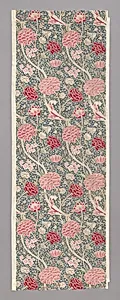
Cray was the most complex of the large-scale designs named for rivers in that it required 34 printing blocks—more than any other. The two examples of Cray in the collection [1974.419a and 2018.827] appear to have been made with different sets of printing blocks, as the size of the pattern is slightly different in length and width.
Art Historical Context
William Morris's *Cray*, designed in 1884 and between 1884 and 1917, is a stunning example of block-printed cotton textile from the Arts and Crafts movement. This of fabric, measuring over 110 inches long, features a repeating pattern (94.5 × 45 cm) inspired by nature—likely intertwining motifs of leaves and branches, evoking the organic beauty Morris championed. Housed in the Art Institute of Chicago's Department, it showcases the plain weave cotton medium, prized for its durability and ability to hold vibrant, hand-applied colors. As a leader of the Arts and Crafts movement, Morris rebelled against the mass-produced goods of the Industrial Revolution, insisting on handmade quality and medieval-inspired designs. Block printing, a labor-intensive technique where carved wooden blocks are inked and stamped by hand, allowed for rich, textured patterns that brought artistry into everyday homes. *Cray* reflects this philosophy, bridging fine art and functional design. Its production span highlights the enduring popularity of Morris & Co. textiles, used in curtains, upholstery, and wall hangings. Visitors today can appreciate how *Cray* revives the joy of craft, reminding us of a time when beauty was woven into daily life.
About the Artist
William Morris · 1834–1896
William Morris (1834–1896) was a British designer, craftsman, writer, and socialist activist who became the most influential figure in the Arts and Crafts movement and one of the most important designers in British history. Born in Walthamstow, Essex, he studied at Oxford, where he formed a lifelong friendship with Edward Burne-Jones and came under the influence of John Ruskin's writings on art, l...