Ctrl K
1834–1896
William Morris (1834–1896) was a British designer, craftsman, writer, and socialist activist who became the most influential figure in the Arts and Crafts movement and one of the most important designers in British history. Born in Walthamstow, Essex, he studied at Oxford, where he formed a lifelong friendship with Edward Burne-Jones and came under the influence of John Ruskin's writings on art, labor, and society.
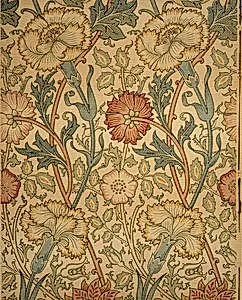
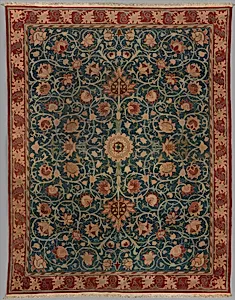
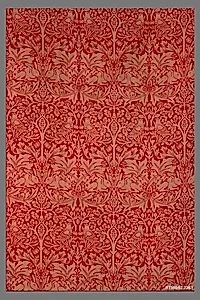
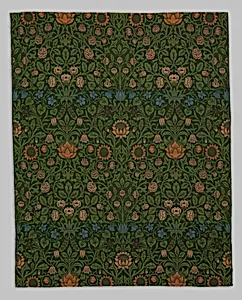
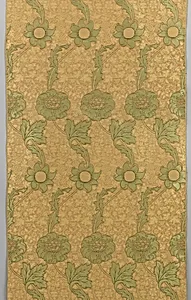
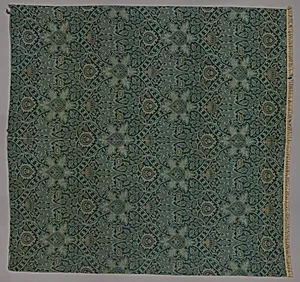
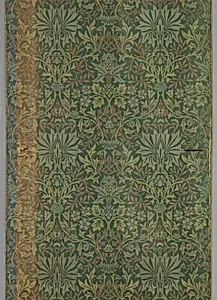
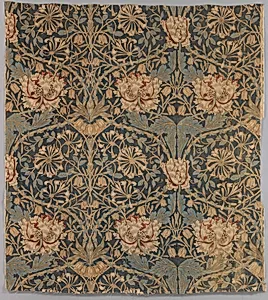
Morris founded the decorative arts firm Morris, Marshall, Faulkner & Company (later Morris & Co.) in 1861, producing wallpapers, textiles, tapestries, stained glass, furniture, and embroidery of extraordinary beauty. His designs — intricate, flat patterns derived from the study of medieval art, natural forms, and Islamic ornament — transformed Victorian interior design and remain in production and widely popular today. Iconic patterns such as "Strawberry Thief," "Willow Bough," and "Honeysuckle" are among the most recognizable designs in the history of the decorative arts.
Morris was equally significant as a typographer and book designer. In 1891, he founded the Kelmscott Press, producing exquisitely designed and printed books — most famously the Kelmscott Chaucer (1896) — that launched the private press movement and permanently influenced the arts of typography and book design.
Morris's conviction that beautiful, handcrafted objects should be available to all people, not just the wealthy, led him to socialist activism and political writing. His utopian novel "News from Nowhere" (1890) imagined a future society organized around creative labor and communal ownership. His designs, writings, and activism are held by the Victoria and Albert Museum, the William Morris Gallery, the British Museum, and the Metropolitan Museum of Art.