
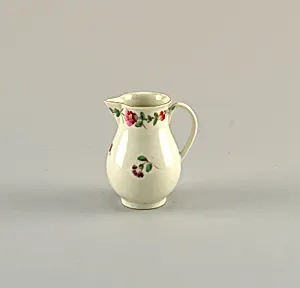
Creamer
late 18th century
Classification
ceramics
Department
Smithsonian Collection
Museum
Smithsonian American Art Museum
Credit
Gift of Wendy Vanderbilt Lehman
Accession Number
1992-5-26
Rights
Public Domain
About this artwork
Research in Progress
Art Historical Context
This elegant creamer, produced by Royal Worcester in late 18th-century England, exemplifies the golden age of British ceramics. Founded in 1751, Royal Worcester was one of the and most prestigious porcelain factories in England, pioneering soft-paste porcelain techniques to expensive Chinese imports. By the late 1700s, the firm had mastered durable, translucent wares that captured the refined tastes of Georgian society, where tea-drinking became a daily ritual among the middle and upper classes. As a functional yet decorative piece from the ceramics collection at the Smithsonian American Art Museum—gifted by Wendy Vanderbilt Lehman—this creamer highlights the era's blend of utility and artistry. Creamers like this were essential to tea services, often featuring intricate shapes and subtle glazes that showcased the potter's skill in molding and firing. Royal Worcester's innovations in porcelain composition ensured pieces that were both lightweight and resilient, making them coveted for both household use and export. Though research continues on this specific example, it invites us to appreciate how such everyday objects fueled Britain's ceramic industry boom, reflecting cultural shifts toward leisure and hospitality. A charming survivor of its time, it whispers of candlelit drawing rooms and shared cups of tea.