
Crock
c. 1940
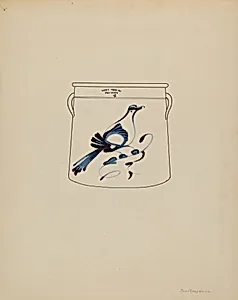
Medium
watercolor, pen and ink, and graphite on paperboard
Dimensions
overall: 28 x 22.7 cm (11 x 8 15/16 in.) Original IAD Object: 11 1/4" High 11 1/2" Dia(top)
Classification
Index of American Design
Department
CG-W
Museum
National Gallery of Art, Washington, D.C.
Credit
Index of American Design
Accession Number
1943.8.7035
Rights
Public Domain
Art Historical Context
**Crock**, a meticulous rendering by artist John Tarantino around 1940, captures the humble yet enduring form of a traditional American pottery crock. Measuring 28 x 22.7 cm overall, this work on paperboard depicts an object originally 11¼ inches high with an 11½-inch top diameter, showcasing its sturdy, utilitarian shape typical of early American stoneware vessels used for storage in households and farms. Created as part of the Index of American Design (IAD), a groundbreaking WPA Federal Art Project from the 1930s and early 1940s, Tarantino's piece exemplifies efforts to document and celebrate America's folk art heritage during the Great Depression. Artists like him produced thousands of such watercolor studies to preserve regional crafts threatened by industrialization, ensuring cultural treasures like this crock—likely from a New England or Mid-Atlantic pottery tradition—reached wider audiences. Tarantino's masterful use of watercolor, pen and ink, and graphite blends vibrant glazes with precise linework, highlighting the crock's subtle contours, handles, and possible salt-glaze textures. Housed in the National Gallery of Art's collection, it invites visitors to appreciate how everyday objects embody American ingenuity and craftsmanship, bridging art, history, and daily life.
About the Artist
John Tarantino · 1855–present
John Tarantino was an American artist active from around 1935 to 1953, best known for his meticulous contributions to the Index of American Design, a Federal Art Project under the Works Progress Administration (WPA). This ambitious initiative commissioned artists across the United States to create precise renderings of everyday folk art objects, preserving the nation's vernacular design heritage a...