
Crocus pot
Unknown Artist
1750–70
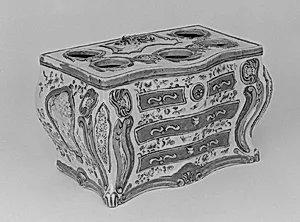
Medium
Hard-paste porcelain
Dimensions
Overall: 5 3/16 × 8 9/16 in. (13.2 × 21.7 cm)
Classification
Ceramics-Porcelain-Export
Culture
Chinese, for European, possibly French, market
Department
European Sculpture and Decorative Arts
Museum
Metropolitan Museum of Art, New York, NY
Credit
Helena Woolworth McCann Collection, Gift of Winfield Foundation, 1951
Accession Number
51.86.104
Rights
Public Domain
Art Historical Context
This delicate crocus pot, crafted in China between 1750 and 1770, exemplifies the artistry of export porcelain tailored for European tastes, possibly French collectors. Made from hard-paste porcelain breakthrough Chinese material fired at high temperatures from kaolin clay—it achieves remarkable translucency, strength and a resonant "ping" when tapped, qualities that captivated 18th-century Europe before local production caught up. Designed as a small vessel (5 3/16 × 8 9/16 inches) for holding crocus bulbs or blooms, it reflects the Rococo-era fascination with chinoiserie: whimsical, exotic motifs blending Eastern craftsmanship with Western luxury. Chinese potters masterfully adapted their techniques for overseas markets, producing durable, ornamental ceramics that graced aristocratic tables and gardens, symbolizing global trade and refined opulence. Today, in the Metropolitan Museum of Art's European Sculpture and Decorative Arts collection—thanks to the 1951 Helena Woolworth McCann gift—this anonymous masterpiece invites us to ponder the invisible hands bridging continents, turning everyday flowers into treasures of cross-cultural elegance.