
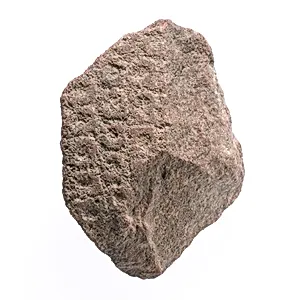
Crown with discs
Unknown Artist
ca. 1353–1336 B.C.
Medium
Red quartzite
Dimensions
H. 10.1 × W. 7.5 × Th. 2.7 cm (4 × 2 15/16 × 1 1/16 in.)
Classification
Crown with discs
Period
New Kingdom, Amarna Period
Department
Egyptian Art
Museum
Metropolitan Museum of Art, New York, NY
Credit
Harris Brisbane Dick Fund, 1957
Accession Number
57.180.152
Rights
Public Domain
Art Historical Context
This exquisite "Crown with Discs," carved from red quartzite around 1353–1336 B.C., hails from Egypt's New Kingdom during the revolutionary Amarna Period of Dynasty 18. This era, under Pharaoh Akhenaten, marked a bold shift toward monotheistic worship of the sun god Aten, influencing art with elongated forms, naturalism, and symbolic motifs like the solar disc. Though created by an unknown artist, crown likely served as a votive model or ritual object, evoking royal or divine authority in a time of profound cultural transformation. Crafted from durable red quartzite—a prized, hard stone evoking the desert's fiery hues and associated with eternity—the crown measures a modest 10.1 cm high, suggesting it was not worn but perhaps offered in temples. Its discs may symbolize the Aten's rays, a hallmark of Amarna iconography, demonstrating masterful stoneworking techniques honed by Egyptian artisans to capture intricate details in miniature scale. Acquired by The Metropolitan Museum of Art through the Harris Brisbane Dick Fund in 1957, this artifact offers a glimpse into Amarna's innovative spirit, where art blurred lines between pharaoh, queen, and deity. Visitors, imagine it adorning a sacred statue, radiating the sun's life-giving power!