
Crucifix
ca. 1450
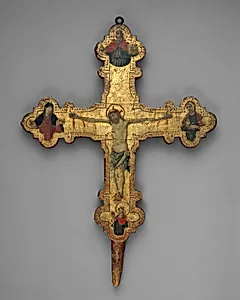
Medium
Tempera on wood, gold ground
Dimensions
Overall, excluding peg at base, 15 5/8 x 13 7/8 in. (39.7 x 35.2 cm)
Classification
Paintings
Department
Robert Lehman Collection
Museum
Metropolitan Museum of Art, New York, NY
Credit
Robert Lehman Collection, 1975
Accession Number
1975.1.25
Rights
Public Domain
Tags
Art Historical Context
This exquisite *Crucifix* by Giovanni Antonio da Pesaro, dating to around 1450, exemplifies the devotional art of mid-15th-century Italy. Crafted in tempera on wood with a shimmering gold ground, the panel measures 15⅝ × 13⅞ inches and captures the Crucifixion of Christ in poignant, intimate scale ideal for private prayer or altar use. Housed in the Robert Lehman Collection at The Metropolitan Museum of Art, it reflects the Venetian region's blend of late Gothic elegance and emerging Renaissance naturalism. The gold ground, a hallmark of Italian panel painting, evokes a divine, otherworldly glow, drawing the viewer's eye to Christ's suffering form amid the stark drama of the Crucifixion. Tempera, a durable egg-based medium, allowed da Pesaro—active in Pesaro near Venice—to achieve luminous colors and fine details, such as the delicate folds of drapery and expressive anatomy. These crucifixes were central to Christian worship, serving as focal points for meditation on sacrifice and redemption during the Renaissance's spiritual fervor. Da Pesaro's work bridges medieval traditions and humanistic innovation, underscoring the era's reverence for sacred imagery. A quiet testament to faith, this piece invites contemplation of Christ's humanity and divinity in a golden halo of eternity.