
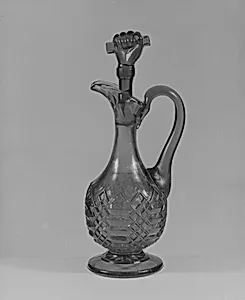
Cruet
after 1876
Medium
Pressed amethyst glass
Dimensions
H. 7 7/8 in. (20 cm)
Classification
Cruet
Culture
American
Department
The American Wing
Museum
Metropolitan Museum of Art, New York, NY
Credit
Gift of Mrs. Emily Winthrop Miles, 1946
Accession Number
46.140.293a, b
Rights
Public Domain
Tags
Art Historical Context
This elegant cruet, crafted by the Bryce Brothers after 1876, exemplifies the ingenuity of American glassmaking during the late nineteenth century. Standing just under eight inches tall, the vessel is formed from pressed amethyst glass—a vibrant purple hue achieved through the addition of manganese. As a functional container for oil or vinegar, it reflects the growing demand for affordable yet decorative tableware in American households following the 1876 Centennial Exposition, when pressed-glass production flourished in factories across Pennsylvania and the Midwest. Bryce Brothers, based in Pittsburgh, specialized in mechanical pressing techniques that allowed intricate patterns to be replicated quickly and inexpensively. The “Hands” motif likely refers to decorative elements molded into the surface, adding a playful, tactile quality to an everyday object. Such details elevated utilitarian items into small works of suited to Victorian dining tables. Donated to the Metropolitan Museum in 1946 by collector Emily Winthrop Miles, this cruet now resides in the American Wing, where it illustrates how industrial innovation and aesthetic appeal merged in post-Civil War America. Its modest scale and rich color continue to charm visitors interested in the nation’s material culture.