
Cuffs (2)
Unknown Artist
late 19th century
Medium
Bobbin lace, Duchesse lace
Dimensions
H. 5 x W. 11 inches (12.7 x 27.9 cm)
Classification
Textiles-Laces
Culture
Belgian, Brussels
Department
European Sculpture and Decorative Arts
Museum
Metropolitan Museum of Art, New York, NY
Credit
Gift of Mrs. Amelia B. Lazarus, in the name of Miss Emilie Lazarus, 1895
Accession Number
95.1.8, .8a
Rights
Public Domain
Tags
Art Historical Context
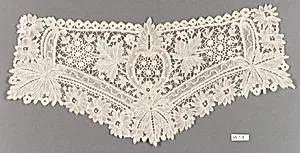
Step into the delicate world of 19th-century fashion with *Cuffs (2)*, a pair of exquisite cuffs crafted in Brussels, Belgium, during the late 1800s. Produced in the renowned lace-making hub of Brussels, these cuffs (each measuring 5 x 11 inches) served as luxurious accessories for elite wardrobes, adorning sleeves to add elegance and refinement. Donated to the Metropolitan Museum Art in 1895 by Mrs. Amelia B. Lazarus in honor of Miss Emilie Lazarus, they now reside in the European Sculpture and Decorative Arts department, exemplifying the height of textile artistry. Made from bobbin lace in the Duchesse style, these cuffs showcase the meticulous bobbin technique, where fine threads are twisted and plaited on a pillow with pins to create intricate, durable patterns. Duchesse lace, a Brussels specialty, is prized for its heavy, opulent texture and realistic floral motifs—here featuring blooming flowers and graceful leaves that evoke the natural beauty of Victorian-era gardens. This labor-intensive process, often involving skilled artisans working collaboratively, highlights the craftsmanship that made Brussels lace a global luxury export. Culturally, these cuffs reflect Belgium's dominance in lace production during the late 19th century, a time when such pieces symbolized wealth and sophistication amid the Industrial Revolution's rise. Though by an unknown artist, their preservation offers a tactile glimpse into everyday opulence, inviting visitors to appreciate the fleeting artistry of handmade textiles.