
Handkerchief
Unknown Artist
19th century
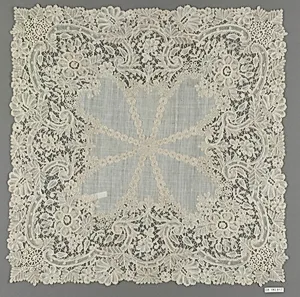
Medium
Bobbin lace, Duchesse lace
Dimensions
L. 14 x W. 14 inches (35.6 x 35.6 cm)
Classification
Textiles-Laces
Culture
Belgian
Department
European Sculpture and Decorative Arts
Museum
Metropolitan Museum of Art, New York, NY
Credit
The Nuttall Collection, Gift of Mrs. Magdalena Nuttall, 1908
Accession Number
08.180.917
Rights
Public Domain
Tags
Art Historical Context
This delicate square handkerchief, crafted in 19th-century Belgium, exemplifies the artistry of bobbin lace, specifically the luxurious Duchesse variety. Measuring 14 by 14 inches, it intricate floral motifs—a hallmark of Belgian lace design—woven with fine threads to create a lightweight yet opulent fabric. Produced during the height of Europe's lace-making golden age, this piece would have been a coveted accessory for fashionable women, adorning pockets or sleeves as a subtle display of refinement. Bobbin lace, the medium here, involves skilled artisans twisting and crossing threads held on handheld bobbins over a patterned pillow, allowing for precise, sculptural patterns like the blooming flowers hinted at in its design. Duchesse lace, named for its ducal elegance, emerged from Brussels traditions as a finer, more elaborate bobbin technique, prized for its clarity and depth. Belgium's lace industry flourished in the 19th century, employing thousands and fueling international trade, making items like this handkerchief symbols of cultural and economic prestige. A generous gift from Mrs. Magdalena Nuttall's collection in 1908, this handkerchief now graces the Metropolitan Museum of Art's European Sculpture and Decorative Arts department. It invites us to appreciate the unseen labor and timeless beauty of handmade textiles, bridging fashion, craft, and history.