
Cup
18th century
Medium
Hard-paste porcelain
Dimensions
Height: 2 5/8 in. (6.7 cm); Diameter: 2 3/8 in. (6 cm)
Classification
Ceramics-Porcelain
Culture
German, Meissen
Department
European Sculpture and Decorative Arts
Museum
Metropolitan Museum of Art, New York, NY
Credit
Gift of Alfred Duane Pell, 1902
Accession Number
02.6.279
Rights
Public Domain
Tags
Art Historical Context
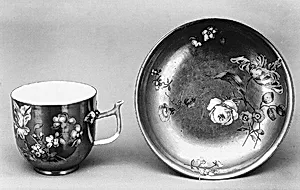
This exquisite cup from the Meissen Manactory exemplifies the pinnacle of 18th-century European porcelain. Founded in 1710 near Dresden, Germany, Meissen was the first factory to successfully produce hard-paste porcelain durable, translucent material made from kaolin, feldspar, and, fired at intensely high temperatures. This breakthrough allowed Europe to rival the coveted Chinese and Japanese imports that had dominated markets for centuries, transforming porcelain from an exotic luxury into a symbol royal prestige under patrons like Augustus the Strong, Elector of Saxony. Crafted in the Rococo style prevalent during the period, the cup stands just 2⅝ inches tall, ideal for serving chocolate or coffee in aristocratic salons. Its delicate floral decorations, hand-painted with vibrant enamels and possibly gilded accents, showcase the meticulous techniques of Meissen artisans, who layered colors before a final glaze firing to achieve lasting brilliance. Such motifs evoked the natural world, blending technical virtuosity with decorative elegance. Housed in The Metropolitan Museum of Art's European Sculpture and Decorative Arts department (gift of Alfred Duane Pell, 1902), this diminutive vessel whispers of Enlightenment-era refinement, where everyday objects became canvases for artistry and cultural exchange.
About the Artist
Meissen Manufactory · 1710–present
The Meissen Manufactory, established on June 6, 1710, by Augustus the Strong, Elector of Saxony and King of Poland, marked the dawn of true hard-paste porcelain production in Europe. Nestled at Albrechtsburg Castle in Meissen near Dresden, the Royal Polish and Electoral Saxon Porcelain Manufactory arose from alchemical experiments begun in 1708 by physicist Ehrenfried Walther von Tschirnhaus and p...