Ctrl K
1710
The Meissen Manufactory, established on June 6, 1710, by Augustus the Strong, Elector of Saxony and King of Poland, marked the dawn of true hard-paste porcelain production in Europe. Nestled at Albrechtsburg Castle in Meissen near Dresden, the Royal Polish and Electoral Saxon Porcelain Manufactory arose from alchemical experiments begun in 1708 by physicist Ehrenfried Walther von Tschirnhaus and perfected by Johann Friedrich Böttger after Tschirnhaus's death. Initial output included reddish-brown Böttger stoneware, transitioning to translucent porcelain by 1713, with early pieces like a stoneware coffeepot (c. 1710–1713) and a figure of Augustus the Strong (c. 1713).
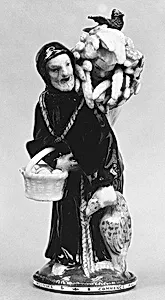
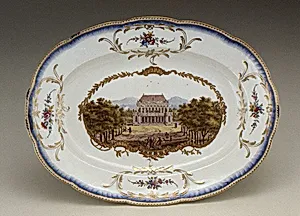
Under directors like Johann Gregor Herold from 1720, who pioneered overglaze colors, and chief modellers such as Johann Gottlieb Kirchner and Johann Joachim Kändler—appointed master modeller in 1733—the manufactory attracted top talents and shifted from imitating Chinese and Japanese export wares (chinoiseries, Kakiemon patterns, and "Indianische Blumen") to distinctly European Baroque and Rococo styles. Kändler, supported by Johann Friedrich Eberlein and Peter Reinicke, crafted intricate figurines, animals, and tableware, while Herold's student Johann Georg Heintze added hunting motifs. The crossed swords trademark, introduced in 1722, became one of the world's oldest.
Meissen's masterpieces defined porcelain artistry, including the monumental Swan Service (1737–1743), a Baroque tour de force of over 2,200 pieces modeled by Kändler, Eberlein, and Johann Gottlieb Ehder for Heinrich von Brühl, featuring swan motifs amid mythological aquatic scenes. Other icons encompass the Monkey Band (Affenkapelle, 1753–1760s), Commedia dell'arte figures like Pantalone with an Actress (c. 1741), the Blue Onion pattern (Zwiebelmuster, designed 1739), and the Temple of Honour centrepiece (1748). These blended sculptural bravura with delicate painting, influencing Sèvres and beyond.
Today, as Staatliche Porzellan-Manufaktur Meissen GmbH owned by the Free State of Saxony since 1991, the manufactory upholds its Triebischtal workshops' handcraft traditions while embracing modern commissions, from Neo-Rococo revivals by Ernst August Leuteritz to experimental atelier pieces. Its legacy as Europe's porcelain pioneer endures in museums worldwide, embodying Saxony's "white gold" innovation.