
Cup
ca. 1750–52
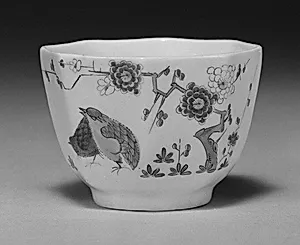
Medium
Soft-paste porcelain
Dimensions
Height: 2 1/16 in. (5.2 cm)
Classification
Ceramics-Porcelain
Culture
British, Chelsea
Department
European Sculpture and Decorative Arts
Museum
Metropolitan Museum of Art, New York, NY
Credit
The Hans Syz Collection, Gift of Stephan B. Syz and John D. Syz, 1995
Accession Number
1995.268.121
Rights
Public Domain
Tags
Art Historical Context
This exquisite cup, crafted by the Chelsea Porcelain Manufactory 1750–52, exemplifies early British porcelain artistry. Standing just over 2 inches tall, it was produced during the manufactory's "raised anchor period, a pivotal phase in its short but influential history. Chelsea, founded in London circa 1743 by goldsmith Nicholas Sprimont, among Britain's first porcelain factories, rivaling imports from China and Saxony's Meissen works. Made of soft-paste porcelain—a blend of clay, glass frit, and other materials fired at lower temperatures—this medium allowed for the translucent, creamy white body prized by 18th-century collectors. Unlike harder Chinese porcelain, soft-paste enabled intricate molding and vibrant overglaze enameling, as seen in the delicate motifs of birds and flowers adorning this piece. These naturalistic designs reflect the Rococo taste for elegant, whimsical nature scenes in decorative arts. Housed in The Metropolitan Museum of Art's European Sculpture and Decorative Arts collection, this cup from The Hans Syz Collection highlights Chelsea's role in elevating British ceramics to luxury status. Likely used for chocolate or tea—a fashionable indulgence—it invites us to appreciate the technical finesse and cultural aspiration of Georgian-era craftsmanship.
About the Artist
Chelsea Porcelain Manufactory · 1744–1784
**Chelsea Porcelain Manufactory** The Chelsea Porcelain Manufactory, Britain's pioneering porcelain enterprise, was founded around 1743 in Chelsea, London, by two Huguenot silversmiths: Nicholas Sprimont from Liège and Charles Gouyn. Sprimont, trained in Paris as a goldsmith before immigrating to England, brought his expertise in luxury metalwork to the venture, while Gouyn handled early sales th...