
Cup
Unknown Artist
9th–10th century
Medium
Glass; free blown and impressed
Dimensions
H. 3 3/8 in. (8.3 cm) W. 3 3/4 in. (9.5 cm)
Classification
Glass
Department
Islamic Art
Museum
Metropolitan Museum of Art, New York, NY
Credit
Purchase, Joseph V. McMullan Gift, 1974
Accession Number
1974.15
Rights
Public Domain
Tags
Art Historical Context
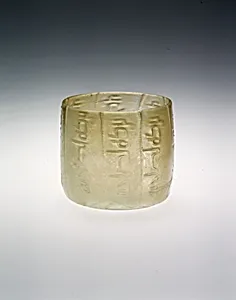
This delicate glass cup, crafted by an unknown artist in the th–10th century hails from the Islamic world during the Abbasid Caliphate's golden age. Measuring just 3⅜ inches high and 3¾ inches wide, it exemplifies the everyday elegance of medieval Islamic tableware. Displayed in the Metropolitan Museum of Art's Islamic Department (purchased with the Joseph V. McMullan Gift in 197), it reflects the era's sophisticated craftsmanship, when Arabic-speaking regions like Iraq, Syria, and Egypt led in glass production. The cup was made using free-blown and impressed techniques, hallmarks of Islamic glassmaking innovation. Free-blowing involved gathering molten glass on a blowpipe, inflating it into a bubble, and shaping it with tools for a thin, lightweight form—ideal for practical use yet strikingly graceful. Impressing added subtle textures or patterns by pressing molds or tools into the hot glass, creating visual interest without heavy decoration. This method allowed for mass production of high-quality vessels, blending utility with artistry. Culturally, such cups highlight Islam's emphasis on beauty in daily life, often used for beverages during communal meals or scholarly gatherings. Though undecorated, its pristine form speaks to the era's mastery of clear, colorless glass—a technological leap that influenced global traditions. A humble treasure, it invites us to appreciate the artisans who elevated the ordinary.