
Cup
Unknown Artist
19th century
Medium
White porcelain decorated with iron red and gold (Hizen ware, Kutani type)
Dimensions
H. 2 5/8 in. (6.7 cm)
Classification
Ceramics
Culture & Period
Japan · Edo (1615–1868) or Meiji period (1868–1912)
Department
Asian Art
Museum
Metropolitan Museum of Art, New York, NY
Credit
Gift of Charles Stewart Smith, 1893
Accession Number
93.3.513
Rights
Public Domain
Tags
Art Historical Context
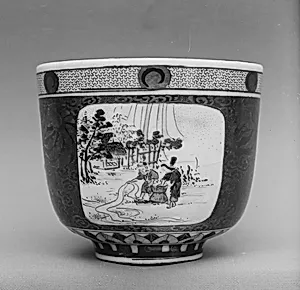
This exquisite porcelain cup, crafted in 19th-century Japan during the late Edo (1615–1868) or early Meiji (1868–1912) period, exemplifies the mastery of Hizen ware in the vibrant Kutani type. Standing just 2 5/8 inches (6.7 cm) tall, its white body is adorned with bold iron-red enamels and shimmering gold accents, applied in overglaze techniques that allowed for intricate, colorful designs fired at lower temperatures. These methods, perfected in kilns like those in Arita (Hizen province), produced durable yet luxurious ceramics prized for both domestic use and export. The cup's decoration features delicate motifs of trees and human figures, evoking scenes from nature and everyday life—a common theme in Japanese porcelain that blended artistry with cultural storytelling. Hizen ware, especially Kutani-style pieces, gained fame for their exuberant palettes, contrasting the subtler blues and whites of earlier Kakiemon porcelain. Such small vessels were likely used for tea or sake, reflecting Japan's tea ceremony traditions and the era's growing global trade. A generous gift to the Metropolitan Museum of Art in 1893 by Charles Stewart Smith, this anonymous masterpiece highlights the West's early fascination with Japanese aesthetics during the Meiji opening. Pause to admire how its vivid hues capture the poetic harmony of humanity and the natural world.