
Cup
Unknown Artist
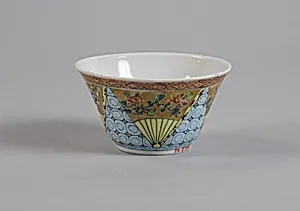
Medium
Porcelain painted in overglaze polychrome enamels
Dimensions
H. 1 1/2 in. (3.8 cm); Diam. 2 3/4 in. (7 cm)
Classification
Ceramics
Culture & Period
China · Qing dynasty (1644–1911)
Department
Asian Art
Museum
Metropolitan Museum of Art, New York, NY
Credit
Purchase by subscription, 1879
Accession Number
79.2.580
Rights
Public Domain
Tags
Art Historical Context
This delicate porcelain cup, hailing from China's Qing dynasty (1644–1911), exemplifies the era's mastery of ceramic artistry. Standing just 1 1/2 inches tall with a 2 3/4-inch diameter, its petite scale suggests it was designed for intimate use, perhaps for sipping tea or wine in a refined household. Produced by an unknown artist, the cup features overglaze polychrome enamels—vibrant colors applied atop a fired glaze and then refired at lower temperatures to fuse them seamlessly. This technique, perfected during the Qing period, allowed for rich, enduring hues that brought scenes to life without compromising the porcelain's translucent purity. Floral motifs, hinted at in its decoration, were a hallmark of Qing porcelain, symbolizing prosperity, longevity, and harmony in Chinese culture. These designs often drew from nature's abundance, reflecting the dynasty's imperial patronage of the arts and its expansive trade networks, which popularized Chinese ceramics worldwide. Acquired through a public subscription in 1879, this piece entered the Metropolitan Museum of Art's Asian Art collection as a testament to early Western fascination with Eastern elegance. Today, it invites us to appreciate the Qing artisans' precision: a tiny vessel that captures an empire's artistic zenith, where beauty met functionality in everyday luxury.