
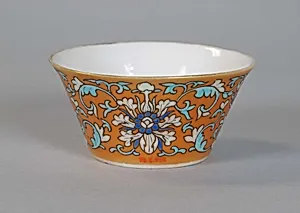
Cup (from a set of eight)
Unknown Artist
Medium
Porcelain with iron-red glaze, painted in overglaze polychrome enamels
Dimensions
H. 1 1/2 in. (3.8 cm); Diam. 3 3/4 in. (9.5 cm)
Classification
Ceramics
Culture & Period
China · Qing dynasty (1644–1911)
Department
Asian Art
Museum
Metropolitan Museum of Art, New York, NY
Credit
Purchase by subscription, 1879
Accession Number
79.2.922
Rights
Public Domain
Tags
Art Historical Context
This delicate porcelain cup, part of a matching set of eight from China's Qing dynasty (16441911), exemplifies the's mastery of ceramics. Standing just 1 1/2 inches tall with a 3 3/4-inch diameter it was likely designed for intimate rituals like tea drinking or wine tasting, reflecting the refined domestic culture of imperial China. Acquired by the Metropolitan Museum of Art through subscription purchase in 1879, it entered Western collections during a surge of fascination with Chinese export porcelain. Crafted with an iron-red and adorned in overglaze polychrome enamels—painted after the initial high-temperature firing and refired at lower heat for vibrant, durable colors—the cup showcases advanced Jingdezhen techniques. Floral motifs, a hallmark of Qing decoration, bloom across its surface, symbolizing prosperity, harmony, and the natural world's enduring beauty in Chinese aesthetics. These sets were prized for their uniformity and elegance, often gracing scholarly gatherings or elite banquets. Though the artist and exact date remain unknown, this cup highlights the Qing's porcelain legacy: a pinnacle of technical innovation and artistic splendor that influenced global design for centuries. Visitors, imagine sipping from it amid blooming peonies—timeless luxury in miniature form.