
Cup and saucer
19th century
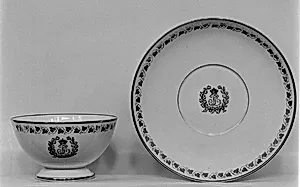
Medium
Soft-paste porcelain
Dimensions
Overall (cup .8a): 2 3/4 × 4 3/4 in. (7 × 12.1 cm); Overall (saucer .8b): 1 3/8 × 7 1/8 in. (3.5 × 18.1 cm)
Classification
Ceramics-Porcelain
Culture
French, Sèvres
Department
European Sculpture and Decorative Arts
Museum
Metropolitan Museum of Art, New York, NY
Credit
Bequest of Margarette A. Jones, 1906
Accession Number
07.233.8a, b
Rights
Public Domain
Tags
Art Historical Context
This elegant cup and saucer set, produced by the renowned Sèvres Manufactory 19th-century France, exemplifies the pinnacle of European porcelain craftsmanship. Crafted soft-paste porcelain—a, creamy material prized for its translucency and ability to hold delicate painted details—the pieces measure a dainty 2¾ × 4¾ inches for the cup and 1⅜ × 7⅛ inches for the saucer. Adorned with vibrant floral motifs and insignia, they reflect the opulent decorative tastes of the era, blending artistry with functionality for refined tea rituals. Founded in the 18th century as the royal porcelain works at Vincennes and later Sèvres, the manufactory held a royal warrant, supplying luxury goods to French monarchs and aristocracy. Soft-paste porcelain, perfected at Sèvres before the widespread adoption of harder varieties, allowed for intricate overglaze enameling and gilding, techniques that brought paintings of flowers—symbols of beauty and abundance—to life with jewel-like intensity. The insignia hints at personalized commissions, perhaps for nobility or special occasions. Now housed in the Metropolitan Museum of Art's Department of European Sculpture and Decorative Arts, thanks to the 1906 bequest of Margarette A. Jones, this set invites visitors to appreciate how Sèvres porcelain bridged art and everyday luxury, embodying France's enduring legacy in ceramics.
About the Artist
Sèvres Manufactory · 1740–present
The Sèvres Manufactory, one of Europe's premier porcelain producers, was established in 1740 as the Manufacture de Vincennes under the patronage of Queen Marie Leszczyńska, who sought to rival Meissen and Chantilly porcelains with French soft-paste innovations. Initially a private venture, it relocated to Sèvres in 1756 in a purpose-built facility designed by architect Laurent Lindet near Madame d...