
Cup and saucer
1774–1814
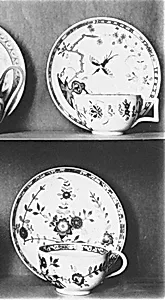
Medium
Hard-paste porcelain
Dimensions
Height (Cup (.10a)): 2 1/2 in. (6.4 cm); Diameter (Saucer (.10b)): 2 3/4 in. (7 cm)
Classification
Ceramics-Porcelain
Culture
German, Meissen
Department
European Sculpture and Decorative Arts
Museum
Metropolitan Museum of Art, New York, NY
Credit
Bequest of Margarette A. Jones, 1906
Accession Number
07.233.10a, b
Rights
Public Domain
Art Historical Context
This delicate cup and saucer, by the renowned Meissen Manufactory during Marcolini Period (4–1814), the pinnacle of 18th- and early 19th-century European artistry. Founded in 1710 near Dresden, Germany, Meissen was the first European factory to successfully produce hard-paste porcelain technical breakthrough that rivaled prized Chinese imports. Under director Carlo Palatino Marcolini, the manufactory refined its output for elite clientele, blending technical mastery with elegant designs suited to aristocratic dining. Made from translucent hard-paste porcelain, the cup stands just 2½ inches tall, with a saucer measuring 2¾ inches across, perfect for intimate tea rituals. This durable yet refined medium allowed for intricate molding and decoration, though the subtle scale highlights everyday luxury rather than ostentation. Meissen's crossed swords mark, often under the glaze, authenticated these pieces as genuine. Housed in The Metropolitan Museum of Art's European Sculpture and Decorative Arts collection, this bequest from Margarette A. Jones in 1906 evokes the refined tastes of Enlightenment-era Europe. Such tableware symbolized sophistication and national pride, transforming the simple act of sipping tea into a cultural statement. Visitors, imagine holding this heirloom—its lightness belying centuries of innovation!
About the Artist
Meissen Manufactory|Marcolini Period · 1710–present
The Meissen Manufactory, established on June 6, 1710, by Augustus the Strong, Elector of Saxony and King of Poland, marked the dawn of true hard-paste porcelain production in Europe. Nestled at Albrechtsburg Castle in Meissen near Dresden, the Royal Polish and Electoral Saxon Porcelain Manufactory arose from alchemical experiments begun in 1708 by physicist Ehrenfried Walther von Tschirnhaus and p...