
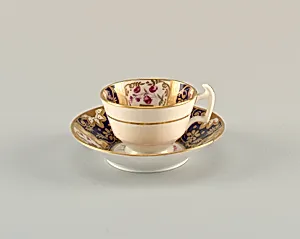
Cup and Saucer, from a Tea Service
19th century
Classification
ceramics
Department
Smithsonian Collection
Museum
Smithsonian American Art Museum
Credit
Gift of Wendy Vanderbilt Lehman
Accession Number
1992-5-49-a,b
Rights
Public Domain
About this artwork
Research in Progress
Art Historical Context
This elegant **Cup and Saucer from a Tea Service**, crafted by the renowned Spode Ceramic Works in (established 1776 exemplifies 19th-century British ceramic artistry. Spode, a pioneer in fine porcelain production, became synonymous with luxurious tableware during the Industrial Revolution, blending traditional craftsmanship with innovative manufacturing techniques. Though specific details of its decoration await further research, such pieces were typically adorned with intricate patterns inspired by nature, classical motifs, or exotic imports, reflecting the era's global trade influences. In Victorian society, tea services like this one were central to social rituals, symbolizing refinement and hospitality. Spode's output, often featuring durable bone china—a translucent, high-strength material they helped popularize—graced households across Britain and America. Donated to the Smithsonian American Art Museum by Wendy Vanderbilt Lehman, this artifact highlights transatlantic cultural exchange, evoking the genteel pastime of afternoon tea amid the backdrop of empire and emerging middle-class aspirations. As part of the Smithsonian Collection, it invites us to savor not just its form, but the stories of daily life it once held—perhaps shared conversations over steaming cups in a sunlit parlor. (198 words)