
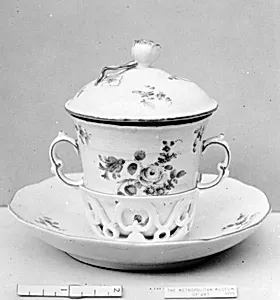
Cup and saucer (trembleuse)
ca. 1765–70
Medium
Hard-paste porcelain
Dimensions
Height (cup .133a, b): 3 1/4 in. (8.3 cm); Diameter (saucer .134): 5 1/2 in. (14 cm)
Classification
Ceramics-Porcelain
Culture
German, Berlin
Department
European Sculpture and Decorative Arts
Museum
Metropolitan Museum of Art, New York, NY
Credit
Gift of Henry G. Marquand, 1894
Accession Number
94.4.133a, b, .134
Rights
Public Domain
Tags
Art Historical Context
This exquisite *cup and saucer (trembleuse)*, crafted by the Royal Porcelain Manactory in Berlin around 1765–70, exemplifies the pinnacle of 18th-century European porcelain artistry. Produced during the reign Frederick the Great, who the manufactory in 3 to rival Saxony's Meissen, the set is made of hard-paste porcelain—a advanced, translucent material fired at high temperatures, mimicking coveted Chinese imports while offering superior durability. Delicately painted with roses, it reflects the era's passion for naturalistic floral motifs, evoking the Rococo elegance of Prussian court life. The trembleuse design is a clever innovation: the saucer's deep central well cradles the cup, preventing spills for those with unsteady hands—ideal for the elderly or infirm enjoying chocolate or coffee, beverages then seen as luxurious novelties. Standing just 3¼ inches tall with a 5½-inch saucer, this intimate pair was likely intended for intimate social rituals, blending functionality with opulent decoration. Housed in The Metropolitan Museum of Art as a gift from Henry G. Marquand in 1894, it highlights Berlin's brief but brilliant dominance in porcelain production, showcasing technical mastery and cultural refinement before industrial shifts altered the craft. A charming glimpse into Enlightenment-era luxury!