
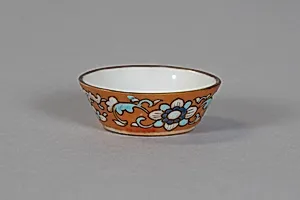
Cup (from a set of eight)
Unknown Artist
Medium
Porcelain with iron-red glaze, painted in overglaze polychrome enamels
Dimensions
H. 1/2 in. (1.3 cm); Diam. 1 3/4 in. (4.4 cm)
Classification
Ceramics
Culture & Period
China · Qing dynasty (1644–1911)
Department
Asian Art
Museum
Metropolitan Museum of Art, New York, NY
Credit
Purchase by subscription, 1879
Accession Number
79.2.924
Rights
Public Domain
Tags
Art Historical Context
This exquisite porcelain cup, part of a set of eight China's Qing dynasty (16441911), exemplifies the era's mastery of fine ceramics. Measuring just ½ inch high and 1¾ inches in diameter, its diminutive scale suggests it was crafted for intimate rituals, perhaps serving fragrant teas or wines among the elite. Adorned with floral motifs—symbols of prosperity and harmony in Chinese culture—the cup features an iron-red glaze and vibrant overglaze polychromeels, a technique that allowed artists to layer vivid, translucent colors fired at lower temperatures for jewel-like brilliance. Qing porcelain from workshops like Jingdezhen represented the pinnacle of imperial innovation, blending technical precision with decorative splendor. The overglaze enameling, often associated with famille rose palettes, produced durable yet delicate wares prized for export and domestic luxury. These cups reflect the dynasty's cosmopolitan flair, influenced by trade with Europe and Japan. Acquired by the Metropolitan Museum of Art in 1879 through public subscription, this piece highlights early Western fascination with Asian artistry. Today, it invites us to marvel at Qing ingenuity—tiny treasures that captured the fleeting beauty of flowers and the sophistication of daily refinement.