
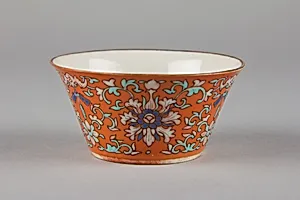
Cup (from a set of eight)
Unknown Artist
late 18th–first half of the 19th century
Medium
Porcelain with iron-red glaze, painted in overglaze polychrome enamels
Dimensions
H. 1 3/4 in. (4.4 cm); W. 3 1/2 in. (8.9 cm)
Classification
Ceramics
Culture & Period
China · Qing dynasty (1644–1911)
Department
Asian Art
Museum
Metropolitan Museum of Art, New York, NY
Credit
Purchase by subscription, 1879
Accession Number
79.2.1100
Rights
Public Domain
Tags
Art Historical Context
This delicate porcelain cup, part of an elegant set of eight, hails from China's Qing dynasty (16441911), specifically the late 18th to first half of the 19 century. Standing just 1 3/4 inches tall and 3 1/2 inches wide, it the exquisite miniaturization prized in Qing ceramics, perfect for intimate tea gatherings or ceremonial use. Crafted with an iron-red glaze and adorned in overglaze polychrome enamels the cup features vibrant floral motifs—likely symbols of prosperity, renewal, and natural harmony in Chinese culture. The overglaze enameling technique was a hallmark of Qing porcelain innovation, allowing artists to apply vivid colors like reds, blues, and golds after the initial high-fired glaze, then refire at lower temperatures for a glossy finish. This method produced durable yet intricately painted wares, often exported worldwide, blending imperial refinement with everyday luxury. Acquired by subscription in 1879 for the Metropolitan Museum of Art's Asian Art collection, this cup offers a glimpse into the dynasty's porcelain mastery, when such sets graced elite tables amid China's flourishing trade era.