
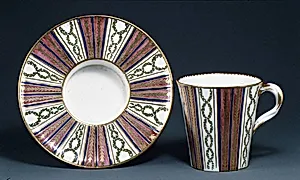
Cup (gobelet)
Medium
Soft-paste porcelain
Dimensions
3 1/2 × 3 3/8 in. (8.9 × 8.6 cm)
Classification
Ceramics-Porcelain
Culture
French, Sèvres
Department
European Sculpture and Decorative Arts
Museum
Metropolitan Museum of Art, New York, NY
Credit
Gift of Ronald D. Schwarz, 1964
Accession Number
64.42.1
Rights
Public Domain
Art Historical Context
This delicate *Cup (gobelet)* from the Sèvres Manufactory, crafted in 1765, exemplifies the pinnacle of 18th-century French porcelain artistry. Made of soft-paste porcelain—a refined European substitute for true Chinese porcelain before the hard-paste formula was perfected—this petite vessel measures just 3½ × 3⅜ inches, ideal for intimate sips of coffee or chocolate in aristocratic salons. Sèvres, the royal manufactory near Versailles, held a monopoly on luxury porcelain under Louis XV, blending technical innovation with opulent design. Soft-paste porcelain allowed Sèvres artisans to achieve translucent elegance and vibrant colors, often gilded and painted with floral motifs or mythological scenes reflective of the Rococo style's playful exuberance. By 1765, the factory was transitioning toward Neoclassicism, but pieces like this gobelet retained the era's emphasis on refinement and exclusivity, reserved for the elite. Housed in the Metropolitan Museum of Art's European Sculpture and Decorative Arts department (gift of Ronald D. Schwarz, 1964), this cup offers a glimpse into Versailles' lavish culture, where porcelain symbolized wealth and sophistication. Imagine it gracing a *service de table* for Madame de Pompadour herself— a testament to France's enduring ceramic legacy.
About the Artist
Sèvres Manufactory · 1740–present
The Sèvres Manufactory, one of Europe's premier porcelain producers, was established in 1740 as the Manufacture de Vincennes under the patronage of Queen Marie Leszczyńska, who sought to rival Meissen and Chantilly porcelains with French soft-paste innovations. Initially a private venture, it relocated to Sèvres in 1756 in a purpose-built facility designed by architect Laurent Lindet near Madame d...