
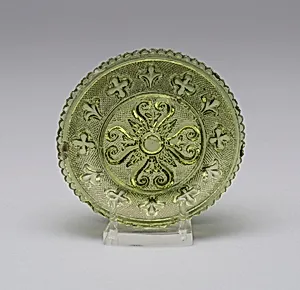
Cup plate
1830–35
Medium
Pressed glass
Dimensions
Diam.: 8.4 cm (3 5/16 in.)
Classification
plate (general, dish)
Department
Arts of the Americas
Museum
Art Institute of Chicago
Accession Number
82979
Rights
Public Domain
Art Historical Context
In the early 19th century, households buzzed with innovation in everyday tableware, and this delicate cup plate from 1830–35 exemplifies spirit. Measuring just 3 5/16 inches in, it served a practical purpose: protecting wooden tables from the heat and drips ofacups during social gatherings like tea parties, a staple of middle-class life. Produced anonymously in the United States, it reflects the growing accessibility of decorative glass for ordinary families. Crafted from pressed glass—a revolutionary technique of the era—this plate was made by pouring molten glass into ornate metal molds and pressing it with a plunger. This method, perfected around 1825 by pioneers like Deming Jarves in New England, allowed for intricate patterns and textures at a fraction of the cost of hand-blown glass. Previously a luxury for the elite, pressed glass democratized beauty, flooding homes with affordable elegance amid America's industrial boom. Today, housed in the Art Institute of Chicago's Arts of the Americas department, this unassuming plate highlights cultural shifts toward domestic refinement. Cup plates like this one are prized by collectors for their subtle motifs—though specifics here remain a mystery—and stand as quiet testaments to 19th-century ingenuity and the charm of daily rituals.