
Cup plate
c. 1835
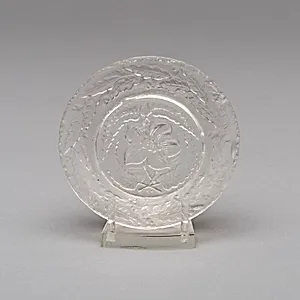
Medium
Pressed glass
Dimensions
Diam.: 7.6 cm (3 in.)
Classification
plate (general, dish)
Department
Arts of the Americas
Museum
Art Institute of Chicago
Accession Number
83017
Rights
Public Domain
Art Historical Context
Nestled in the Art Institute of Chicago's Arts of the Americas collection, this delicate cup plate from around 1835 exemplifies early 19th-century American ingenuity in glassmaking. Measuring just 3 inches in diameter, this pressed glass dish was designed to sit beneath teacups, safeguarding tabletops from heat and spills during the tea-drinking rituals that defined middle-class social life. Pressed glass, a revolutionary technique patented in the 1820s, allowed for the mass production of intricate, affordable decorative objects. Molten glass was forced into metal molds under pressure, creating detailed patterns quickly and economically—far surpassing handmade blown glass. By the 1830s, American factories like those in New England churned out thousands of these plates, often adorned with motifs symbolizing national pride or domestic virtue, making luxury accessible to everyday households. Though the artist remains unknown, this unassuming plate reflects a broader cultural shift: the rise of consumer culture in a young republic, where even humble tabletops could sparkle with elegance. A charming survivor of daily life, it invites us to imagine the clink of porcelain and murmur of conversation in an American parlor nearly two centuries ago.