
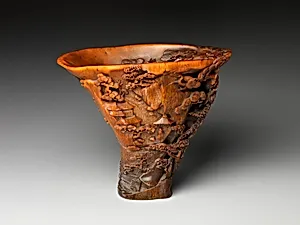
清 犀角雕山水人物杯|Cup with figures in a landscape
Unknown Artist
18th century
Medium
Rhinoceros horn
Dimensions
H. 6 in. (15.2 cm)
Classification
Horn
Culture & Period
China · Qing dynasty (1644–1911)
Department
Asian Art
Museum
Metropolitan Museum of Art, New York, NY
Credit
Gift of J. Pierpont Morgan, 1908
Accession Number
08.212.2
Rights
Public Domain
Tags
Art Historical Context
This exquisite rhinoceros horn cup, crafted in 18th-century Qing dynasty China, stands as a testament to the era's masterful artistry. Measuring just 6 (15.2 cm) in height, it features intricate carvings of human figures wandering through a serene landscape dotted with trees. The translucent, ivory-like material of the horn allows light to play across its surfaces, enhancing the depth and vitality of the scene—a harmonious blend of nature and human presence typical of Chinese literati ideals. Rhinoceros horn was a prized luxury material during the Qing period (1644–1911), celebrated for its smooth texture, subtle sheen, and reputed detoxifying properties, making such cups both functional drinking vessels and symbols of refined taste among the elite. Artisans employed precise relief carving techniques, hollowing the horn while preserving its natural form to depict layered mountains, foliage, and figures in motion, showcasing exceptional skill in three-dimensional storytelling on a miniature scale. Now housed in the Metropolitan Museum of Art's Asian Art Department, this piece entered the collection as a gift from J. Pierpont Morgan in 1908. It invites visitors to marvel at Qing China's fusion of utility, mythology, and aesthetic perfection, where every curve whispers tales of imperial elegance.