
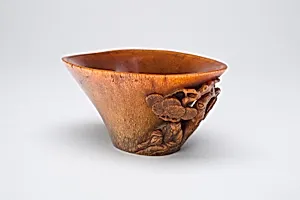
Cup with Handle in the Form of a Scholar Seated Beneath a Pine Tree
Late Ming (1368–1644) or early Qing dynasty (1644–1911), 17th/18th century
Medium
Rhinoceros horn
Dimensions
5.7 × 13 × 8.2 cm (2 1/4 × 5 1/8 × 3 1/4 in.)
Classification
drinking vessel
Department
Arts of Asia
Museum
Art Institute of Chicago
Accession Number
35926
Rights
Public Domain
About this artwork
This cup is crafted from rhinoceros horn, a precious material that was imported to China from Southeast Asia during the late Imperial period, and gained popularity among the elites of that era. The craftsman who fashioned this vessel paid great attention to highlighting the visual and material qualities of the rhinoceros horn. The cup’s oval, flaring shape follows the natural curvature of the horn, while its surface has been carefully polished to accentuate the material’s rich amber-brown color ...
Art Historical Context
This exquisite *Cup with Handle in the Form of a Scholarated Beneath a Pine Tree is a masterful example of Chinese craftsmanship from the late Ming (1368–1644) or early Qing dynasty (4–1911), to the 17th or 18th century. Carved from a single piece of rhinoceros—a rare and luxurious material prized by the elite—the vessel measures just 5.7 × 13 × 8.2 cm, making it perfectly suited for intimate sipping of wine or tea. Rhino horn was not only valued for its translucency and durability but also believed to possess medicinal properties and the ability to detect poison, elevating such cups to status symbols among scholars and officials. The handle, ingeniously shaped as a scholar reclining beneath a gnarled pine tree, embodies core Chinese cultural ideals. The pine, an evergreen enduring harsh winters, symbolizes longevity and resilience, while the scholarly figure evokes Confucian virtues of wisdom, contemplation, and harmony with nature. Artisans employed meticulous freehand carving techniques, exploiting the horn's natural texture to create lifelike details—from the scholar's flowing robes to the pine's twisting branches—without metal tools, showcasing extraordinary skill. Held in the Art Institute of Chicago's Arts of Asia collection, this drinking vessel offers a window into imperial China's refined aesthetic, where functionality merged seamlessly with philosophical symbolism. Visitors can marvel at how such a humble object encapsulated the era's aspirations for immortality and intellectual pursuit.
About the Artist
Unknown
The artist designated as "Unknown" in our virtual museum's collection exemplifies a poignant chapter in art history: creators whose identities have faded into obscurity despite the enduring power of their work. With only one known artwork attributed to them in our holdings, this figure represents countless anonymous hands that shaped visual culture across centuries. Museums worldwide, including th...