
Cupboard
c. 1938
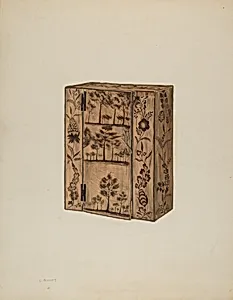
Medium
watercolor, colored pencil, and graphite on paperboard
Dimensions
overall: 45.8 x 35.9 cm (18 1/16 x 14 1/8 in.) Original IAD Object: none given
Classification
Index of American Design
Department
CG-W
Museum
National Gallery of Art, Washington, D.C.
Credit
Index of American Design
Accession Number
1943.8.4935
Rights
Public Domain
Art Historical Context
In the late 1930s, artist Charles Henning captured the elegant simplicity of an American cupboard in this meticulous rendering, created around 1938. Using watercolor, colored pencil, and graphite on paperboard (measuring 45.8 x 35.9 cm), Henning's work exemplifies the precision of mixed-media techniques that allowed for vibrant colors, fine lines, and subtle shading. These methods brought historical objects to life on paper, preserving details like wood grain and joinery that might otherwise fade from view. This artwork is a gem from the Index of American Design, a groundbreaking WPA Federal Art Project from the Great Depression era (1935–1942). Hundreds of artists documented everyday American crafts—furniture, textiles, and tools—to celebrate the nation's folk heritage and skilled artisanship. Henning's cupboard rendering highlights the functional beauty of early American design, likely rooted in colonial or Federal-period traditions, emphasizing sturdy forms and practical ornamentation. Today, housed in the National Gallery of Art, it invites us to appreciate how such projects not only provided jobs for artists but also fostered cultural pride during tough times. A testament to America's inventive spirit, this piece reminds visitors of the artistry in our utilitarian past.
About the Artist
Charles Henning · 1855–present
Charles Henning remains one of the more elusive figures in the historical record, and the details of his life and training have not been firmly established by scholars. The works attributed to him suggest a practitioner with some formal grounding in draftsmanship and composition, yet the circumstances of his education and the masters or institutions that shaped him are not currently documented. W...