
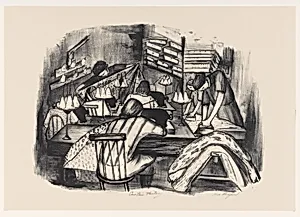
Curtain Factory
ca. 1936–39
Medium
Lithograph
Dimensions
Sheet: 14 1/4 × 20 1/2 in. (36.2 × 52.1 cm) Image: 12 in. × 15 3/4 in. (30.5 × 40 cm)
Classification
Prints
Department
Drawings and Prints
Museum
Metropolitan Museum of Art, New York, NY
Credit
Gift of New York City W.P.A., 1943
Accession Number
43.33.694
Rights
Public Domain
Tags
Art Historical Context
Riva Helfond's *Curtain Factory* (ca. 1936–39) is a poignant lithograph born from the Works Progress Administration (WPA), a New Deal program that employed artists during the Great Depression to document American life. As part of New York City's WPA graphic arts project, Helf captured the daily grind of urban industry, focusing on women laborers—a theme resonant in social realist art of the era. This print, gifted to the Metropolitan Museum of in 1943, exemplifies federal initiatives democratized art, making prints accessible to wide audiences. The image depicts a bustling factory scene with women hunched over sewing machines, tables strewn with fabric, and irons at the ready. Helfond's lithography technique—transferring greasy crayon drawings onto stone for inked impressions—allowed for rich tonal contrasts and intricate details, evoking the hum of machinery and quiet determination of workers. At 14¼ × 20½ inches, its modest scale belies its emotional depth, highlighting gender roles in manufacturing during economic hardship. This artwork underscores the cultural importance of WPA prints in preserving stories of the working class, offering visitors a window into 1930s America where women's labor powered factories amid widespread unemployment. A testament to resilience, it invites reflection on labor history and artistic activism.