
Cushion Cover
Qing dynasty (1644–1911), 1775/1800
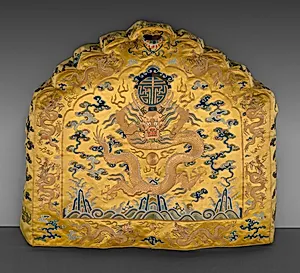
Medium
Silk, warp-float faced 7:1 satin weave; embroidered with silk and gold-leaf-over-lacquered-paper-strip-wrapped silk in knot, satin, and stem stitches; laid work and couching
Dimensions
84.1 × 90.3 × 12.7 cm (33 1/8 × 35 1/2 × 5 in.)
Classification
textile
Department
Textiles
Museum
Art Institute of Chicago
Accession Number
71800
Rights
Public Domain
Art Historical Context
This exquisite **Cush Cover** from the Qing dynasty (1644–1911), created by Manchu artisans around 1775–1800, exemplifies the opulent textile arts of imperial China. Measuring an impressive 84.1 × 90.3 × 12.7 cm, it was likely designed for elite furnishings, such as seating in palaces or high-status homes, where such lavish pieces signaled wealth and refinement during the Qianlong or Jiaqing emperor eras. Crafted from silk in a warp-float faced 7:1 satin weave—a luxurious ground that shimmers with light—the cover is masterfully embroidered with silk threads and gold-leaf-over-lacquered-paper-strip-wrapped silk. Techniques like knot, satin, and stem stitches, combined with laid work and couching, create intricate patterns that catch the eye with metallic brilliance and dimensional depth. These methods, honed over centuries, highlight the Manchu court's fusion of Han Chinese traditions with nomadic influences, producing textiles prized for their durability and visual splendor. Housed in the Art Institute of Chicago's Textiles Department, this cushion cover offers a window into Qing opulence, where embroidery wasn't just decoration but a cultural art form symbolizing harmony, prosperity, and imperial power. Visitors will appreciate its tactile allure and the skilled hands behind its enduring beauty.
About the Artist
Manchu
"Manchu" is a cultural and ethnic designation used in museum collection records to identify objects, textiles, costumes, and decorative arts associated with the Manchu people, a Tungusic group originating from the regions northeast of the Great Wall of China. The Manchus rose to political dominance in 1644 when they conquered the declining Ming dynasty and established the Qing dynasty, which ruled...