
Custard Pot with Cover
1790–95
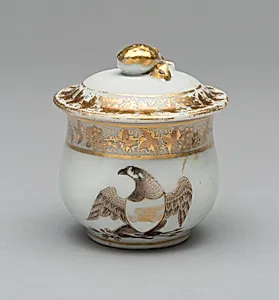
Medium
Hard-paste porcelain with enamels and gilding
Dimensions
8.3 × 8.9 × 7 cm (3 1/4 × 3 1/2 × 2 3/4 in.)
Classification
tableware
Department
Arts of the Americas
Museum
Art Institute of Chicago
Accession Number
7947
Rights
Public Domain
Art Historical Context
This exquisite *Custard Pot with Cover crafted in Chinese export porcelain around 1790–95, exemplifies the height of global trade luxury during the late 18th century. Produced in China specifically for Western markets, including the Americas, this petite tableware piece (measuring just 8.3 × 8.9 × 7 cm) was designed for serving creamy desserts like custard, blending Eastern craftsmanship with European tastes. Housed in the Art Institute of Chicago's of the Americas department, reflects how such imports graced affluent American dining tables amid the young republic's fascination with refined global goods. The pot's medium—hard-paste porcelain, fired at high temperatures for exceptional durability and translucency—marked a pinnacle of Chinese ceramic technology, far surpassing European soft-paste imitations at the time. Vibrant enamels provided colorful overglaze decoration, while gilding added opulent gold accents, showcasing meticulous famille rose techniques popular in export wares. These elements not only ensured functionality but also symbolized status, as porcelain shipments via Dutch, British, and American traders fueled the Chinoiserie craze. As a snapshot of cross-cultural exchange, this custard pot highlights porcelain's role in everyday elegance, bridging imperial China and the burgeoning United States during a transformative era of commerce and colonialism. Visitors will appreciate its delicate scale and shimmering finish, a testament to artistry that traveled thousands of miles to enhance intimate meals.