
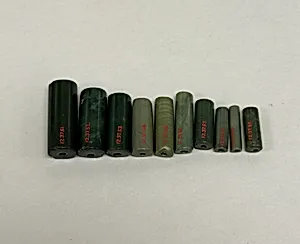
Cylinder
Unknown Artist
7th century or earlier
Medium
Green jasper
Dimensions
L. 3/4 in. (1.9 cm) - 1 3/8 in. (3.5 cm) for 12.37.51-60
Classification
Jewelry
Culture & Period
Japan · Kofun period (ca. 300–710)
Department
Asian Art
Museum
Metropolitan Museum of Art, New York, NY
Credit
Rogers Fund, 1912
Accession Number
12.37.56
Rights
Public Domain
Art Historical Context
Nestled in the Metropolitan Museum of Art's Asian Art collection, this set of ten delicate green jasper cylinders (ion nos. 12.37.51–60) hails from Japan's Kofun period (. 300–710 CE), a time of monumental keyhole-shaped burial mounds and the rise of powerful clans. Dating to the 7th century or earlier, these tiny jewels—measuring just 3/4 to 1 3/8 inches (1.9–3.5 cm) long—were crafted as adornments, likely strung into necklaces or sewn onto garments for elite burials or ceremonial wear. Carved from lustrous green jasper, a durable semi-precious stone imported or sourced locally, the cylinders showcase the Kofun era's sophisticated lapidary techniques. Artisans expertly shaped and polished the hard stone, achieving a smooth, vibrant finish that symbolized status and spiritual power. Such jewelry reflects continental influences from Korea and China, blending with indigenous traditions during Japan's formative Yamato state. These artifacts, acquired through the Rogers Fund in 1912, offer a glimpse into Kofun society's reverence for the afterlife, where grave goods ensured prosperity in the next world. Though small, their exquisite craftsmanship endures as a testament to ancient ingenuity.