
Cylinder seal with cultic scene
Unknown Artist
late 9th–7th century BCE
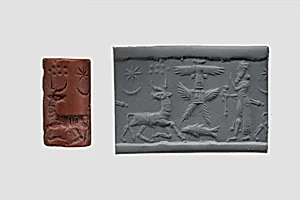
Medium
Red Jasper (Quartz)
Dimensions
H. 1 1/16 in. (2.7 cm); Diam. 1/2 in. (1.3 cm)
Classification
Stone-Cylinder Seals
Culture & Period
Assyrian · Neo-Assyrian
Department
Ancient Near Eastern Art
Museum
Metropolitan Museum of Art, New York, NY
Credit
Gift of Nanette B. Kelekian, in memory of Charles Dikran and Beatrice Kelekian, 1999
Accession Number
1999.325.68
Rights
Public Domain
Tags
Art Historical Context
Step into the world of ancient Assyria with this exquisite cylinder seal from the Neoyrian period (late9th–7th BCE). Crafted from vibrant red jasper—a durable quartz prized for its rich color and fine grain—this tiny gem (just 1 1/16 inches high ½ inch in diameter) captures a cultic scene teeming with human figures, animals, and fish. Rolled across soft clay, such seals left intricate impressions to authenticate documents, goods, or royal decrees, blending artistry with everyday administration in one of history's most powerful empires. The Neo-Assyrian culture, centered in modern-day Iraq and Syria, produced these seals as miniature masterpieces of engraving. Artisans meticulously carved the hard stone using fine tools, creating raised designs that revealed sacred rituals when impressed. This seal's cultic imagery likely evokes religious devotion, perhaps honoring deities tied to fertility, protection, or the life-giving rivers symbolized by fish and animals—reflecting Assyria's blend of mythology and reverence for nature. Housed in the Metropolitan Museum of Art's Ancient Near Eastern Art collection (gift of Nanette B. Kelekian, 1999), this seal offers a window into a sophisticated society where even the smallest objects pulsed with spiritual significance. Imagine pressing it into clay: a ritual frozen in time, bridging the ancient world to ours.