
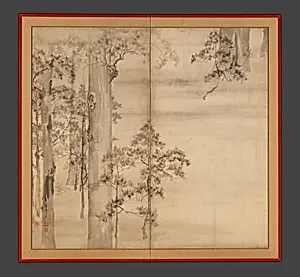
Cypresses
mid-19th century
Medium
Two-panel folding screen; ink on paper
Dimensions
Image: 59 5/16 x 63 1/16 in. (150.6 x 160.2 cm) Overall with mounting: 67 1/2 x 70 1/2 in. (171.5 x 179.1 cm)
Classification
Paintings
Culture & Period
Japan · Edo period (1615–1868)
Department
Asian Art
Museum
Metropolitan Museum of Art, New York, NY
Credit
Mary Griggs Burke Collection, Gift of the Mary and Jackson Burke Foundation, 2015
Accession Number
2015.300.97
Rights
Public Domain
Tags
Art Historical Context
Ikeda Koson's *Cypresses*, a masterful two-panel folding screen from Edo period (1615–1868), the serene beauty of these enduring trees in delicate ink on paper. Created in the mid-19th century, the work exemplifies the refined literati painting tradition, or *nanga*, which drew inspiration from Chinese scholars' expressive brushwork. During the Edo era—a time of relative peace and cultural flourishing—such screens adorned elite homes and tea rooms, serving as both decorative focal points and meditative objects. Rendered in subtle gradations of sumi ink, the composition highlights Koson's skillful control of line and wash, evoking the textured bark and swaying forms of cypresses, symbols of longevity and resilience in Japanese aesthetics. The intimate scale—59 5/16 x 63 1/16 inches for the image alone—invites close contemplation, a hallmark of byobu screens that blurred the line between painting and architecture. Now in the Metropolitan Museum of Art's Mary Griggs Burke Collection, this piece reflects the global appreciation for Edo-period artistry, bridging East Asian traditions with universal themes of nature's quiet strength. Visitors will appreciate its timeless elegance, a window into Japan's artistic soul.