
Monkeys on Rocks and Trees
17th century
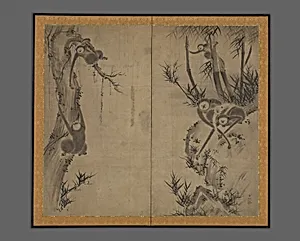
Medium
Two-panel folding screen; ink on paper
Dimensions
59 1/4 × 66 7/16 in. (150.5 × 168.8 cm)
Classification
Paintings
Culture & Period
Japan · Edo period (1615–1868)
Department
Asian Art
Museum
Metropolitan Museum of Art, New York, NY
Credit
H. O. Havemeyer Collection, Bequest of Mrs. H. O. Havemeyer, 1929
Accession Number
29.100.496
Rights
Public Domain
Tags
Art Historical Context
Behold the lively *Monkeys on Rocks and Trees a two-panel folding screen by the Japanese artist Sesson Shūkei, created in the 17th century the Edo period (161–1868). Crafted in ink on paper and measuring an impressive 59¼ × 66⅞ inches, this work exemplifies the refined artistry of byōbu screens, which served as elegant room dividers in affluent Japanese homes, transforming interiors into immersive natural scenes. Sesson Shūkei, working in the suiboku-ga (ink monochrome) tradition, captures the playful energy of monkeys clambering among rugged rocks and twisting trees with fluid, expressive brushstrokes. The minimalist ink washes evoke the Zen-inspired landscapes of earlier masters like Sesshū Tōyō, blending whimsy with profound observation of nature's vitality. Monkeys, often symbols of mischief and the untamed wild in Japanese folklore, bring a sense of joyful chaos to the composition, highlighting humanity's harmonious—or humorous—coexistence with the natural world. Housed in the Metropolitan Museum of Art's Asian Art Department as part of the H. O. Havemeyer Collection (bequeathed in 1929), this screen reflects Edo-era appreciation for nature motifs amid urban prosperity, inviting viewers to pause and delight in its timeless charm.
About the Artist
Sesson Shūkei (Japanese) · 1504 –1589
ca. 1504–ca. 1589