
Cypriote
Medium
glasswares
Classification
glasswares
Department
Smithsonian Collection
Museum
Smithsonian American Art Museum
Credit
Gift of Thomas Carnase
Accession Number
1981-50-1
Rights
Public Domain
About this artwork
Research in Progress
Art Historical Context
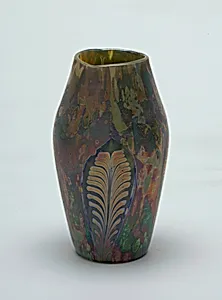
Louis Comfort Tiffany's "Cypriote," created around 1916, exemplifies the artist's mastery of glass as both a functional and decorative medium. As a leading figure in the American Art Nouveau movement, Tiffany revolutionized glassmaking by developing innovative techniques that blended artistry with industrial processes. This piece, part of his renowned Cypriote series, draws inspiration from ancient Mediterranean glass artifacts, transforming humble vessels into objects of luminous beauty. Tiffany's work emerged during a period of rapid industrialization in America, when there was renewed appreciation for handcrafted luxury items. His glasswares, often featuring iridescent surfaces and organic forms, elevated everyday objects to the status of fine art. The Smithsonian American Art Museum's acquisition through the gift of Thomas Carnase highlights the enduring appeal of these creations. Visitors can appreciate how "Cypriote" showcases Tiffany's signature Favrile glass technique, which produced a shimmering, jewel-like quality reminiscent of buried antiquities. This approach not only honored historical precedents but also pushed the boundaries of modern design, influencing decorative arts well into the twentieth century.