
Dagger
Unknown Artist
18th century
Medium
Steel, jade
Dimensions
H. 11 3/4 in. (29.8 cm); H. of blade 7 3/4 in. (19.7 cm); W. 2 1/2 in. (6.4 cm); Wt. 6.4 oz. (181.4 g)
Classification
Daggers
Culture
Indian, Mughal
Department
Arms and Armor
Museum
Metropolitan Museum of Art, New York, NY
Credit
Bequest of George C. Stone, 1935
Accession Number
36.25.1076
Rights
Public Domain
Art Historical Context
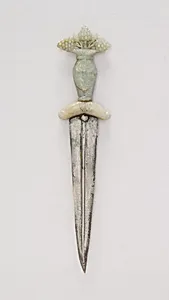
This exquisite 18th-century Mughal dagger from India exemplifies the fusion of functionality and opulence in the arms and armor of the Mughal Empire. Crafted from high-quality steel for its sharply tapered 7¾-inch blade and luxurious jade for the hilt, the dagger measures 11¾ inches in height and weighs a mere 6.4 ounces, making it both balanced for combat and a portable symbol of status. The jade, prized for its translucence and durability, was often carved into ergonomic, pistol-grip shapes typical of Mughal kard daggers, highlighting the era's mastery in hardstone work. During the 18th century, as the Mughal Empire reached its artistic zenith before political decline, such weapons transcended mere utility. Nobles and warriors commissioned them as displays of wealth and power, blending Islamic, Persian, and indigenous Indian motifs. The steel blade likely features subtle watermarking or etching techniques, common in Mughal metallurgy, which produced blades renowned for their strength and beauty. Now housed in the Metropolitan Museum of Art's Arms and Armor Department through the 1935 bequest of collector George C. Stone, this dagger invites visitors to appreciate how Mughal artisans elevated everyday arms into treasures, bridging warfare and fine art.