
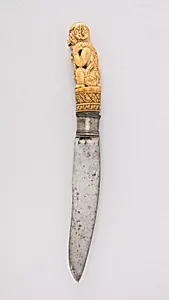
Dagger (Dha or Dah Hmyaung)
Unknown Artist
18th century
Medium
Ivory, steel
Dimensions
H. 14 1/2 in. (36.8 cm); W. 2 in. (5.1 cm); Wt. 15.3 oz. (433.7 g)
Classification
Knives
Culture
Burmese
Department
Arms and Armor
Museum
Metropolitan Museum of Art, New York, NY
Credit
Bequest of George C. Stone, 1935
Accession Number
36.25.998
Rights
Public Domain
Art Historical Context
This exquisite 18th-century Burmese dagger, known as a *Dha* or *Dah Hmyaung*, exemplifies the masterful fusion of functionality and artistry in Southeast Asian arms. Crafted from steel for its razor-sharp blade and ivory for handle, the weapon measures 14½ inches in height and weighs a substantial 15.3 ounces, balancing lethal precision with ergonomic grace. The ivory, prized for its smooth carvability, likely features intricate detailing typical of Burmese craftsmanship, elevating it from mere tool to status symbol. In 18th-century Burma, during the Konbaung Dynasty's era of military prowess and cultural flourishing, daggers like this were essential for warriors and nobility alike. The *Dha*'s curved form made it ideal for slashing in close combat, reflecting Burmese martial traditions amid regional conflicts. Ivory hilts often showcased symbolic motifs—dragons, florals, or mythical creatures—imbuing the object with spiritual protection and prestige. Today, housed in the Metropolitan Museum of Art's Arms and Armor Department through the 1935 bequest of George C. Stone, this piece invites visitors to ponder the blurred lines between weapon and sculpture. Its survival highlights the enduring allure of Burmese metalwork and ivory carving, offering a tangible glimpse into a warrior's world.