
Knife (Chopper)
Unknown Artist
17th–19th century
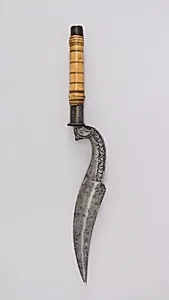
Medium
Steel, horn (stag), iron
Dimensions
H. 16 1/2 in. (41.9 cm); H. of blade 10 1/4 in. (26 cm); W. 1 3/16 in. (3 cm); Wt. 1 lb. (453.6 g)
Classification
Knives
Culture
South Indian
Department
Arms and Armor
Museum
Metropolitan Museum of Art, New York, NY
Credit
Bequest of George C. Stone, 1935
Accession Number
36.25.942
Rights
Public Domain
Art Historical Context
This imposing South Indian knife, known as a "ch," dates to the 17th–19th century and exemplifies the functional yet finely crafted arms from the region. Standing at 16½ inches tall with a 10¼-inch steel blade, it weighs a substantial pound, suggesting its use as a heavy-duty tool or weapon for chopping through dense materials, perhaps in warfare, hunting, or daily agrarian life. Housed in the Metropolitan Museum of Art's Arms and Armor Department, it entered the collection through the 1935 bequest of George C. Stone, a noted collector of global weaponry. Crafted from steel for the razor-sharp blade, stag horn for the ergonomic handle, and iron for structural support, this piece highlights South Indian metalworking prowess. The combination of materials ensured durability and balance, with the horn providing a sure grip even in humid climates. Such knives reflect the martial traditions of southern India, where blacksmiths forged tools that blurred the line between utility and combat readiness. Today, this anonymous masterpiece invites us to ponder the everyday heroism of its makers and users, bridging centuries of cultural resilience.