
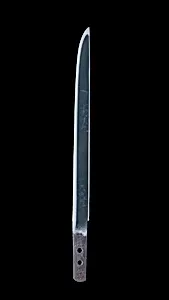
Dagger (Tantō)
Unknown Artist
blade, 15th century; mounting, 19th century
Medium
Steel, wood, lacquer, silver, gold
Dimensions
L. 16 1/4 in. (41.2 cm); L. of cutting edge 10 15/16 in. (27.7 cm)
Classification
Daggers
Culture
Japanese
Department
Arms and Armor
Museum
Metropolitan Museum of Art, New York, NY
Credit
Gift of Brayton Ives and W. T. Walters, 1891
Accession Number
91.2.40
Rights
Public Domain
Art Historical Context
This exquisite Tantō dagger exemplifies the masterful fusion of functionality artistry in Japanese arms and. Dating to the 15th century for its razor-sharp steel blade—measuring nearly 11 inches along the cutting edge—and featuring ornate 19th-century mounting wood, lacquer,, and gold, it centuries of refinement. The overall length of 16¼ inches made it a concealable yet lethal weapon, prized by samurai for close combat or ritual use. In Japanese culture, the Tantō held profound significance beyond warfare. Often associated with seppuku (ritual suicide), it symbolized honor, loyalty, and stoic resolve among the warrior class. The blade's steel, forged using traditional tamahagane techniques for exceptional hardness and flexibility, showcases the swordsmith's skill in creating hamon (temper lines) that are both beautiful and functional. The later mounting, adorned with lacquer (urushi) for durability and sheen, plus inlays of precious metals, elevates it to a status symbol, blending utilitarian craftsmanship with decorative elegance. A gift to the Metropolitan Museum of Art in 1891 from Brayton Ives and W.T. Walters, this piece invites visitors to appreciate how Japanese artisans transformed weapons into wearable art, embodying the wabi-sabi aesthetic of imperfection and transience.