
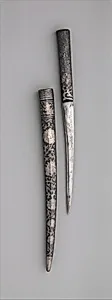
Dagger with Sheath
Unknown Artist
ca. 14th–15th century
Medium
Iron, silver
Dimensions
L. with sheath 12 in. (30.5 cm); L. without sheath 9 3/8 in. (23.8 cm); W. 3/4 in. (1.9 cm); Wt. 5.2 oz. (147.4 g); Wt. of sheath 4.2 oz. (119.1 g)
Classification
Daggers
Culture
probably Central or West Asian
Department
Arms and Armor
Museum
Metropolitan Museum of Art, New York, NY
Credit
Purchase, Kenneth and Vivian Lam Gift, 2004
Accession Number
2004.75a, b
Rights
Public Domain
Art Historical Context
This exquisite dagger with sheath, dating to around the 14th–15th century, hails from probably Central or West Asian cultures exemplifies the masterful craftsmanship of medieval arms. Crafted from iron for the blade and silver for decorative elements, it measures 12 inches (30.5 cm) with its sheath—compact enough for personal carry—and weighs just over 9 ounces total, balancing lethality with portability. The Metropolitan Museum of Art acquired it in 2004 through the generous gift of Kenneth and Vivian Lam. In the turbulent world of late medieval Eurasia, such daggers served dual roles as practical weapons for close combat and symbols of status among warriors, nomads, or elites. The iron blade ensured durability in battle, while silver accents—likely inlaid or overlaid on the hilt or scabbard—added prestige, reflecting techniques common in Persianate or Timurid workshops where metalwork blended utility with artistry. Today, this piece in the Arms and Armor Department invites us to ponder the artistry of survival: a testament to anonymous smiths who forged beauty from iron and silver amid empires rising and falling.