
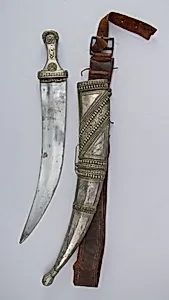
Dagger (Jambiya) with Sheath and Belt
Unknown Artist
19th century
Medium
Steel, silver, wood, leather, iron
Dimensions
H. with sheath 20 5/8 in. (52.4 cm); H. without sheath 20 in. (50.8 cm); W. 2 1/2 in. (6.4 cm); Wt. 12.5 oz. (354.4 g); Wt. of sheath 1 lb. 6.6 oz. (640.7 g)
Classification
Daggers
Culture
Arabian
Department
Arms and Armor
Museum
Metropolitan Museum of Art, New York, NY
Credit
Bequest of George C. Stone, 1935
Accession Number
36.25.723a, b
Rights
Public Domain
Art Historical Context
This exquisite Jambiya dagger, complete with its sheath and belt, hails from 19th-century Arabia, a region where such weapons transcended mere utility to embody cultural identity and social status. Crafted from steel for the sharp, curved blade—ideal for both combat and display—the piece features silver embellishments, wood elements in the hilt, leather wrapping on the sheath, and iron reinforcements. Measuring about 20 inches long with its sheath, it weighs a substantial 12.5 ounces for the dagger alone, underscoring its robust construction suited to a warrior's life. In Arabian culture, particularly among Yemeni and Omani men, the Jambiya was more than a weapon; it symbolized manhood, wealth, and prestige. Often worn thrust through a belt at the waist, its distinctive forward-curving blade and ornate silverwork showcased the artisan's mastery of metalworking techniques, blending functionality with opulent decoration. This example highlights the era's craftsmanship, where silver filigree and inlays elevated everyday arms into treasured heirlooms. Acquired through the 1935 bequest of George C. Stone and now housed in the Metropolitan Museum of Art's Arms and Armor Department, this Jambiya invites visitors to reflect on the artistry of conflict and honor in the Arabian world.