
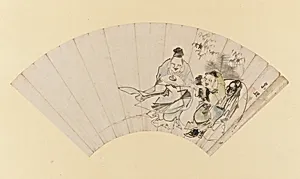
Daikoku and Ebisu as New Year's performers
1615-1868
Classification
Painting
Department
Smithsonian Collection
Museum
Smithsonian American Art Museum
Credit
Gift of Charles Lang Freer
Accession Number
F1898.135c
Rights
Public Domain
Tags
About this artwork
Signed: Sori.
Art Historical Context
This charming painting by Hishikawa Sori captures the lively spirits of Daikoku and Ebisu, two beloved deities from Japan’s Seven Lucky Gods, reimagined as New Year’s street performers. Created during the long Edo period (1615–1868), the work reflects a time when these gods symbolized prosperity, good harvests, and commercial success—qualities especially welcomed at the start of each year. Sori, working in the tradition of the Hishikawa school that helped pioneer ukiyo-e imagery, signed the piece simply “Sori,” inviting viewers to enjoy its festive mood. The depiction likely adorned a folding fan, a format that blended practical use with artistic display during seasonal celebrations. Such images connected everyday objects with cultural rituals, reminding owners of the gods’ playful power to bring fortune. As part of the Charles Lang Freer collection at the Smithsonian American Art Museum, the painting offers a glimpse into how Japanese artists wove mythology, humor, and seasonal joy into portable art forms that traveled through daily life.