
Damon and Pythias
1632
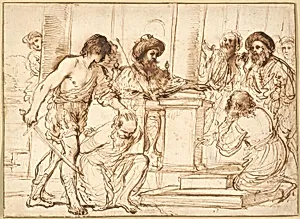
Medium
Pen and brown ink, with brush and light brown wash, on ivory laid paper, laid down on cream laid paper
Dimensions
19.3 × 26.3 cm (7 5/8 × 10 3/8 in.)
Classification
pen and ink drawings
Department
Prints and Drawings
Museum
Art Institute of Chicago
Accession Number
201554
Rights
Public Domain
Art Historical Context
In the Prints and Drawings department of the Art Institute of Chicago sits a captivating 17th-century drawing *Damon and Pyth* (1632), by the Italian Baroque master Guercino (Giovanni Francesco Barbieri). This intimate work on ivory laid paper, measuring just 19.3 × 26.3 cm, illustrates the ancient Greek tale of unwavering friendship from Plutarch's *Lives*. Condemned to death, Pythias begs leave to settle his affairs; his loyal friend Damon pledges his own life as collateral. When Pythias returns just in time, the tyrant Dionysius is so moved he pardons them both. Guercino's rendition captures this emotional climax with dramatic tension, a hallmark of his Baroque style. Executed in pen and brown ink with subtle brush and light brown wash, the drawing exemplifies Guercino's virtuoso draftsmanship. These techniques allowed for fluid lines, rich tonal modeling, and a sense of chiaroscuro—light emerging from shadow—that heightens the figures' expressive gestures and psychological depth. Such works were prized in Guercino's era as both preparatory studies for paintings and standalone treasures, reflecting the Renaissance revival of classical myths to explore human virtues like loyalty amid tyranny. This piece not only showcases Guercino's Bolognese School innovations but also invites visitors to ponder timeless bonds of trust, bridging antiquity and the Counter-Reformation's emphasis on moral exemplars. A gem for drawing enthusiasts!
About the Artist
Guercino · 1591–1666
Son of a laborer who transported wood. He was called Guercino (squinter), because he was cross-eyed or had a squint in his right eye. Reputedly self-taught early, then an apprentice in the shop of Benedetto Gennari. Patrons included the papal legate at Ferrara and the Archbishop of Bologna. He developed a classical style later in his career. After the death of Guido Reni, Guercino was the leading ...